The Adventurers Creative Writing – What did we learn?
At Cymru Global, we have recently completed a creative pilot that I called “The adventurers”. My aim was that people would come along on an adventure, both in terms of what I’d be teaching but also in terms of what they would be taking away from the sessions. They have been such an interesting experience.
The pilot itself came about because of a comment that stayed with me. After carrying out a taster session called What is Global Citizenship?, someone made the comment:
“We hear the concepts but we never hear the stories”
I really understood that feeling. We so often talk about “big ideas” in global learning. like equality, intersectionality and identity but when we try to explain these things, it can all feel academic and removed from us. Global citizenship can be a concept that feels far removed and it can be hard to see these large concepts that underpin our lives.
Stories are the opposite of that. There are really very few people who don’t love hearing “the story”, a fact that’s evidenced by the internet’s obsessions with curiosity and clickbait in the present and by the way that myths and archetypes have been passed along through generations, purified by past as they’ve been handed down.
I wondered about exploring global citizenship through storytelling techniques. The invitation would be for people across Wales to come together for four online sessions in which they could reflect on themes that would be personal to them and yet also entirely universal. I wanted to see what would happen when we invited people to engage personally with global citizenship, to try out storytelling techniques and see what would change when we gave people space to tell their own stories.
The sessions took place across five weeks in May to early June and the sessions were
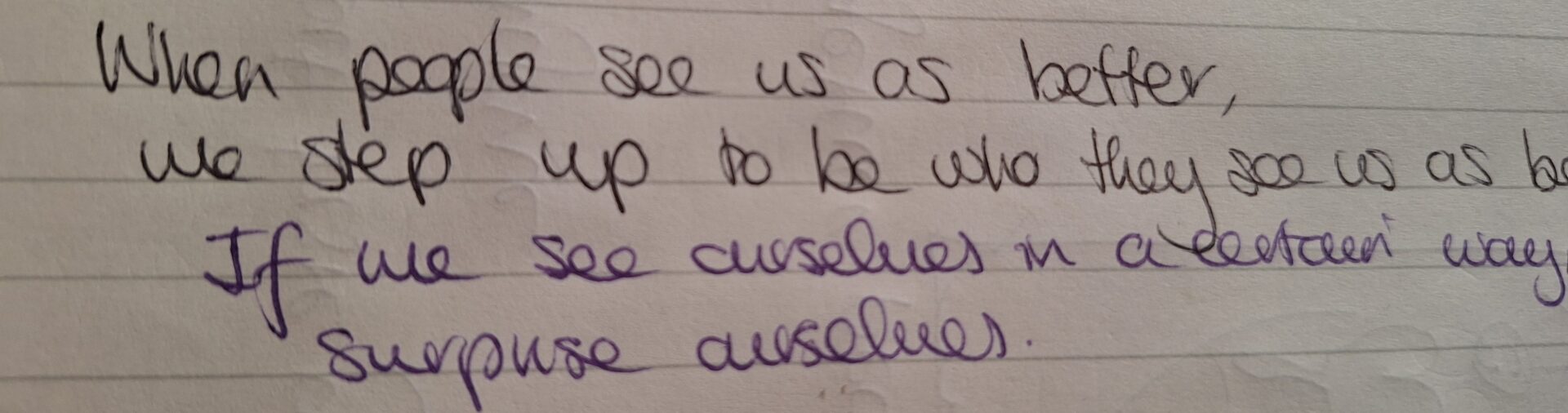
The main character is you: This sessionexplored identity and perception through nicknames and list poetry, reflecting on how people in our lives see us and how that has changed over time.
Landscapes and adventures This session explored connections to and knowledge about the world through diverse communities, investigating some of the features of adventure stories and using landscapes to develop story openings.
Shadow figures and monsters. This session explored authenticity and empowerment through looking at “the monstrous” figures of storytelling and creating our own “monstrous selves” based on the opening of Franz Kafka’s Metamorphosis.
Making Good endings explored hope for the future through reflecting on what we need to make a good ending and writing scenes of healing and hope.
The pilot brought together twenty participants from across Wales and the major feedback that I had from the session s was the impact it had on how participants’ mental health. It seemed universal that participants experienced an emotional “shift” at the end of the sessions compared to the beginning. Some of the comments were:
I felt very different at the end of today compared to the beginning
I really hope you do this again, the space to think was so helpful
It’s not just about how these sessions help me as a writer, they’re also about how they helped me reflect as a person
Something that also came from the feedback was a theme of vulnerability and privacy. Telling our stories intrinsically involved speaking about parts of ourselves that were not necessarily easy to speak about. These included the monstrous parts of ourselves, the things in the world we felt afraid of, belonging and the lack of belonging.. These are not the first things we speak about when we meet new people and yet in an online writing class, we were exploring just that. A feature that became a (somewhat amusing) theme was, in a class where we didn’t expect to share our writing, somehow people found themselves wanting to share more.
An unexpected outcome was a sense of community, developed through speaking about something far beyond smalltalk. What was also remarkable was that several of my colleagues attended the sessions. People who had worked alongside each other for some years had an opportunity to get to know one another in a completely different way. The result was the start of a small community of writers, reflecting on issues that affected all of us and reacting together.
You might be wondering what all this might have to do with global citizenship. Here is feedback that is very much about people’s experience of storytelling and emotional completion but did it actually support my original ideas of making global citizenship come to life? Did anyone really learn anything? My short answer is: absolutely.
I have three aims for my department over the next few years:
To improve people’s knowledge of the world
To empower people to take action in the world
To increase hope for the future
What I found so interesting about this work is how well creative writing acted as a vehicle for helping people towards those aims. When we started speaking about our connections to the world, it gave us a platform for understanding what the world was like for different people including concrete experiences of how life varied from place to place. When we spoke about monsters, the reflections were both freeing (to be honest about what we don’t like about ourselves, to let our whole selves be on display) and empowering (to speak about parts of ourselves that were too large or powerful for societal constraints). When we spoke about good endings, it gave a vocabulary for what we had overcome and what we could do in the future.