Global Health workshops – helping the fish see the water
Yesterday, I had the pleasure of delivering a Global Health workshop with Cardiff University’s student nurses. Nurses in their second year, specialising in either mental health or adult care. Our aim was to give an overview of what global health was and to try and explain why it would be important to our participants in their day to day lives. This was one in a series of workshops and Elearning units that Cymru Global deliver in partnership with the International Health Coordination Centre, and as I started with, these workshops are always a real pleasure.
They’re a pleasure because they’re always so unexpected. We work with health boards all over Wales and people from diverse and varied backgrounds. Depending on the requests of the health boards, we have covered global topics including gender equity, interdependence and partnerships, future mapping for the health service, and of course, what is global citizenship?
Our participant base is generally as varied as you can imagine. We have worked with policy makers, with vast experiences of the health service. We have also worked with students, teachers and even on occasion, younger volunteers. We have also worked with groups as small as four to lectures with more than a hundred people included. What I love about these sessions is the challenge of relating the world of global citizenship to the day to day lives of the people we work with.
What does the Brazilian rainforest have to do with your lunch? Why does it matter how you feel about parking the car? Our sessions unpick the global structures that underpin our lives and help people see how supply chains here have an impact somewhere else. We also start people exploring popularly held opinions and where they might come from. This is what I love: facilitating people in telling their stories and (I hope) helping my fellow fish see the water we’re all swimming in.
That is why the question of “what is global citizenship?” is one that will always be asked and will always need to be answered. In a world that is always changing, we must continue our study . If we want to truly call ourselves “citizens of the world”, I think we have to be willing to keep talking about how our world evolves with a balanced lens that includes both its problems and its opportunities. What’s great about working with such a large audience on this question in particular is that I get to bear witness to the first steps of so many.
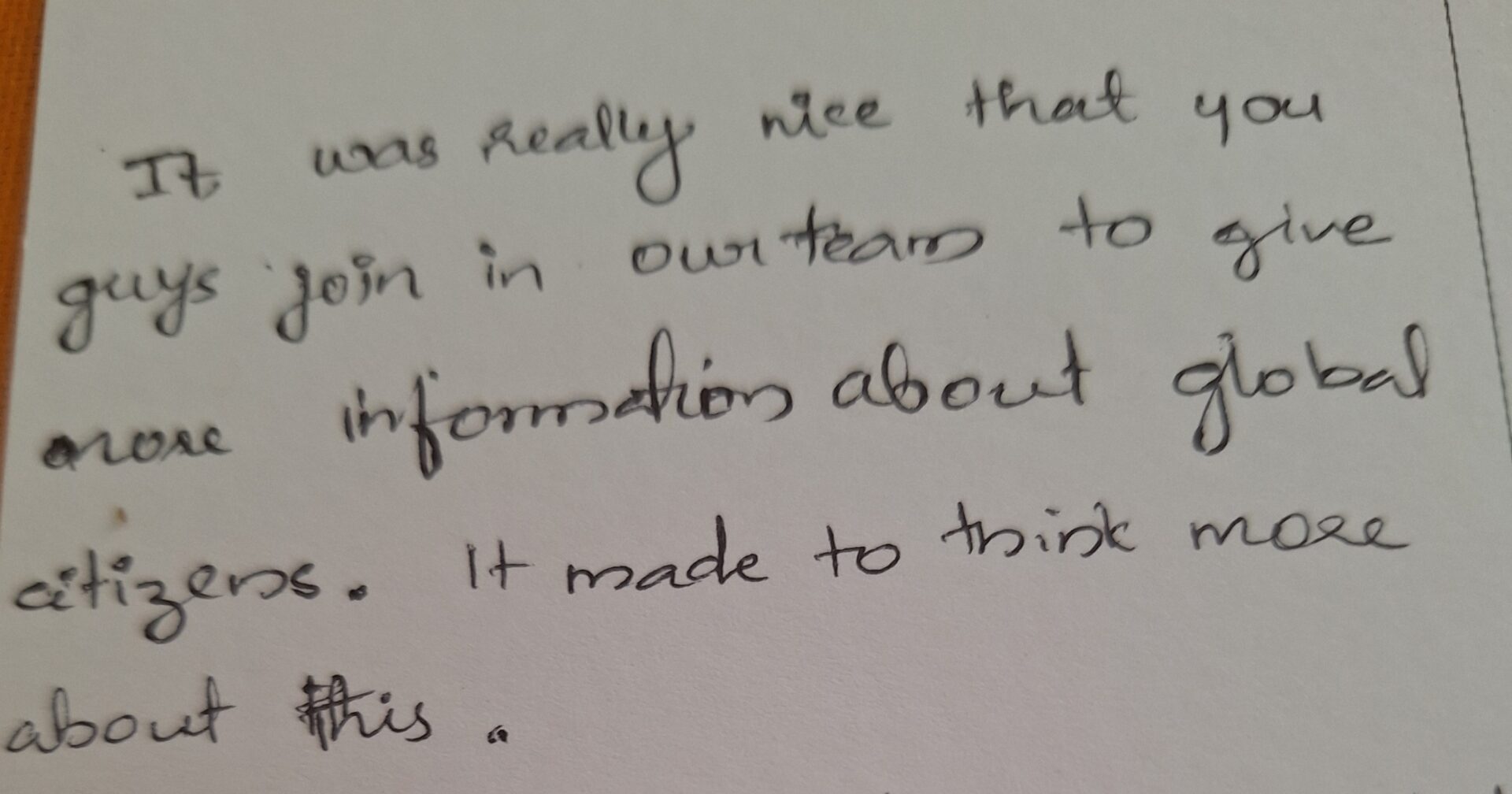
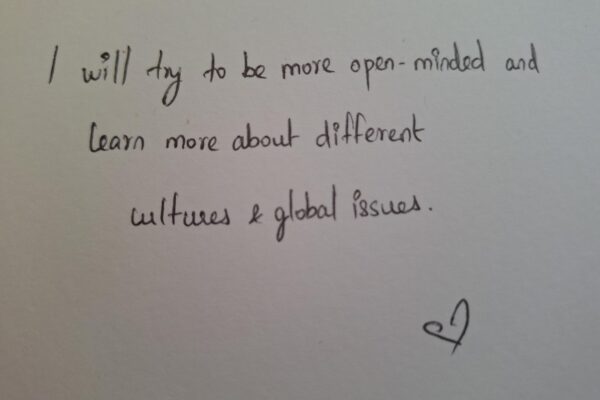
Here are some of the takeaways from our participants from yesterday
It has made me more aware of how my decisions affect other people and the environment.
It helped me make the links between the global and my local community. A great reminder that my actions and decisions can impact others, for better or for worse.
If you would be interested in working with Cymru Global and the IHCC, then do get in touch with us on learning@cymru.global for more information.