Wales and the Spanish Civil War: 90 Years On

This feature complements the interview broadcast on BBC Wales, 18th July 2026 with Cymru Global Heritage Advisor Craig Owen (28:50 on playback recording)
July 2026 marks 90 years since General Franco’s fascist military coup against Spain’s elected government, supported by Hitler and Mussolini, sparking a 3-year Civil War over 1936 to 1939 that precipitated the outbreak of World War Two.
For Wales, this was never a distant war – it drew miners from the valleys to the battlefields of Spain, and brought the children of bombed Guernica and Bilbao into Welsh homes. It remains one of the defining stories of Welsh internationalism, one that continues to shape the Welsh national psyche and popular culture to this day. In the words of the Manic Street Preachers’ 2000 song inspired by a quote from ‘Miners Against Fascism’:
“If you tolerate this, your children will be next”
Nearly 200 Welsh volunteers joined the International Brigades, among 2,500 from Britain and Ireland, of whom at least 33-35 died in Spain. In May 1937, 4,000 Basque children fled to Britain on the SS Habana from Bilbao, of whom 230 children came to Wales and were offered sanctuary by communities in Caerleon (Newport), Sketty (Swansea), Brechfa (Carmarthenshire) and Old Colwyn (Denbighshire).
90 years on, the Welsh story of Spain is both warning and warming: a warning of the dangers when society tolerates authoritarian ‘strong men’ figures who drive division, contrasted with the warming inspiration of ordinary communities choosing solidarity over indifference: a solidarity not ‘granted by government’ or media, but driven from grassroots communities upwards. That heritage of internationalism is exactly what Wales’ Temple of Peace was built to inspire, and Cymru Global seeks to champion for the future.
Welsh Volunteers who fought Fascism
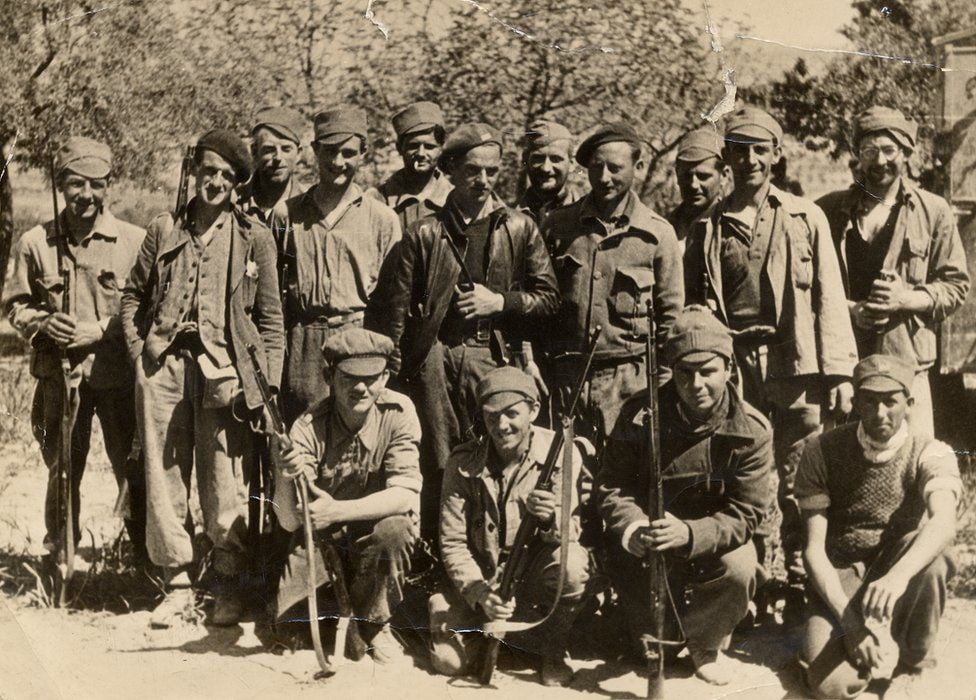
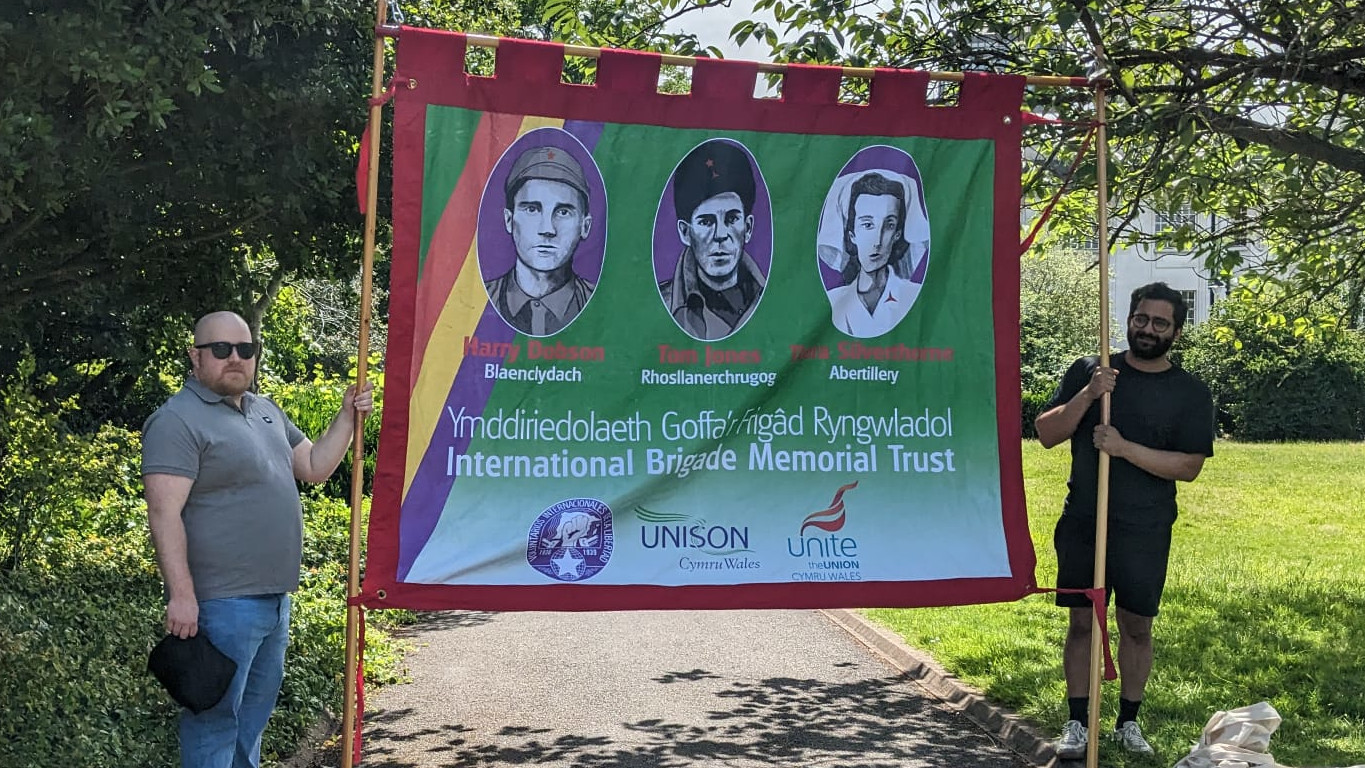
International Brigades volunteers came overwhelmingly from mining communities — men like Harry Dobson, an unemployed Tonypandy miner, mortally wounded at Hill 481 near Gandesa in 1938, aged 30 (one of 35 who never came home); and Edwin Greening of Aberdare, whose memoir ‘From Aberdare to Albacete‘ captures the journey. Thora Silverthorne, a miner’s daughter from Abertillery, served as a frontline nurse who went on to campaign for the founding of the NHS in 1948.
They didn’t see it as “someone else’s war”. Remarkably ordinary people who did an extraordinary thing, they saw fascism as a threat to working people everywhere. Most miners came from valleys communities already politicised by the Great Depression and the means test. As Hywel Francis put it in ‘Miners Against Fascism‘, the pits and the chapels gave them both the solidarity and the moral conviction. Their slogan was ‘No Pasarán’ — they shall not pass — and the outbreak of world war in 1939 proved their warning right.

- ‘Miners Against Fascism’ – tribute to author Hywel Francis (2021), Wales’ leading expert on Wales’ contribution to the Spanish Civil War.
- South Wales and the Spanish Civil War – Virtual SCW Archive
- People’s Collection Wales – digitised items tagged ‘Spanish Civil War’
- People’s History Museum guide – Labour History Archive
- No Pasarán: anti-fascist slogan takes on new significance in Ukraine crisis – Guardian feature, 2022
Welsh Communities who gave Sanctuary to Refugees
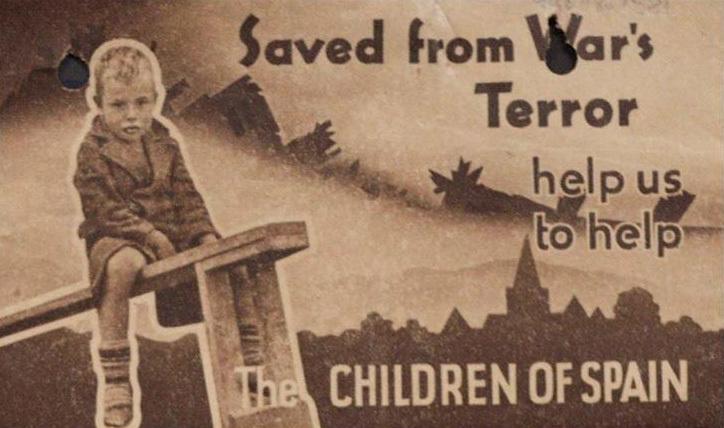
4,000 Basque children fleeing the bombs came to the UK, with 4,000 sailing from Bilbao to Southampton on the SS Habana in May 1937, weeks after Guernica was destroyed. Around 230 came on to Wales, with four communities rallying to provide sanctuary through the National Joint Committee for Spanish Relief: Caerleon in Newport, Sketty in Swansea, Brechfa in Carmarthenshire and rOld Colwyn on the North Wales coast.
On 10 July 1937, 56 children arrived at Newport station and were welcomed to Cambria House, Caerleon — funded not by government (which offered no support) but by the South Wales Miners’ Federation, chapels and public pennies. With 135,000 members, ‘The Fed’ gave large donations to the Spanish cause (£12,500 in May 1938), as well as supporting IB volunteers. Wales’ welcome was very much a people’s welcome.
Britain’s official policy was ‘non-intervention’, so volunteering was actively discouraged, and the refugees received no state support. Some communities did find hosting difficult, and opinion on Spanish Civil War itself was divided in 1930s Britain.
What’s striking is that the solidarity came from below — miners’ lodges, chapels, women’s committees — often in defiance of official policy.

Children in Caerleon published their own ‘Cambria House Journal’ and their football team, Basque Boys AFC, drew crowds across the Valleys. As a ‘living echo’, in 2025 Newport County launched an away kit in Athletic Bilbao colours to honour the story — which speaks directly to Wales’ modern ‘Nation of Sanctuary’ identity.
- Cymru Global / WCIA ‘Schools of Sanctuary’ resource pack, exploring a century of sanctuary movements
- South Wales Argus 2017 ‘long view’ feature: Child Refugees who escaped the Spanish civil war found safety in Newport
- Wales and the Basque Refugees: the Children’s Stories – BBC documentary by Eddie Butler, 2012

A Legacy woven in to Wales’ Temple of Peace – and the Nation
The Spanish Civil War had a lasting political and cultural resonance in South Wales. The Temple of Peace itself opened in November 1938, a ray of hope amidst gathering clouds of conflict. Just weeks later in December 1938, civil rights activist Paul Robeson staged a concert of 7,000 people in Mountain Ash marking return of final IB Volunteers from Spain.
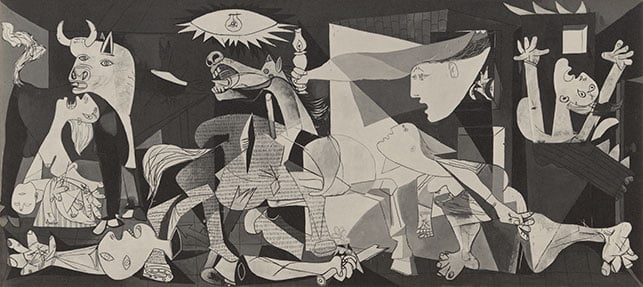
Today, opposite Wales’ just across from Wales’ Spanish Civil War Memorial in Cardiff’s Alexandra Gardens – unveiled in 1992 – the entrance to Wales’ National Garden of Peace is the Spanish Archway, built in summer 1993 by Spanish youth volunteers on a UNA Exchange peace camp. The Temple displays a reproduction of Picasso’s iconic anti-war mural, ‘Guernica’, within the peace wing, now occupied by Cymru Global and other Welsh internationalist organistions.
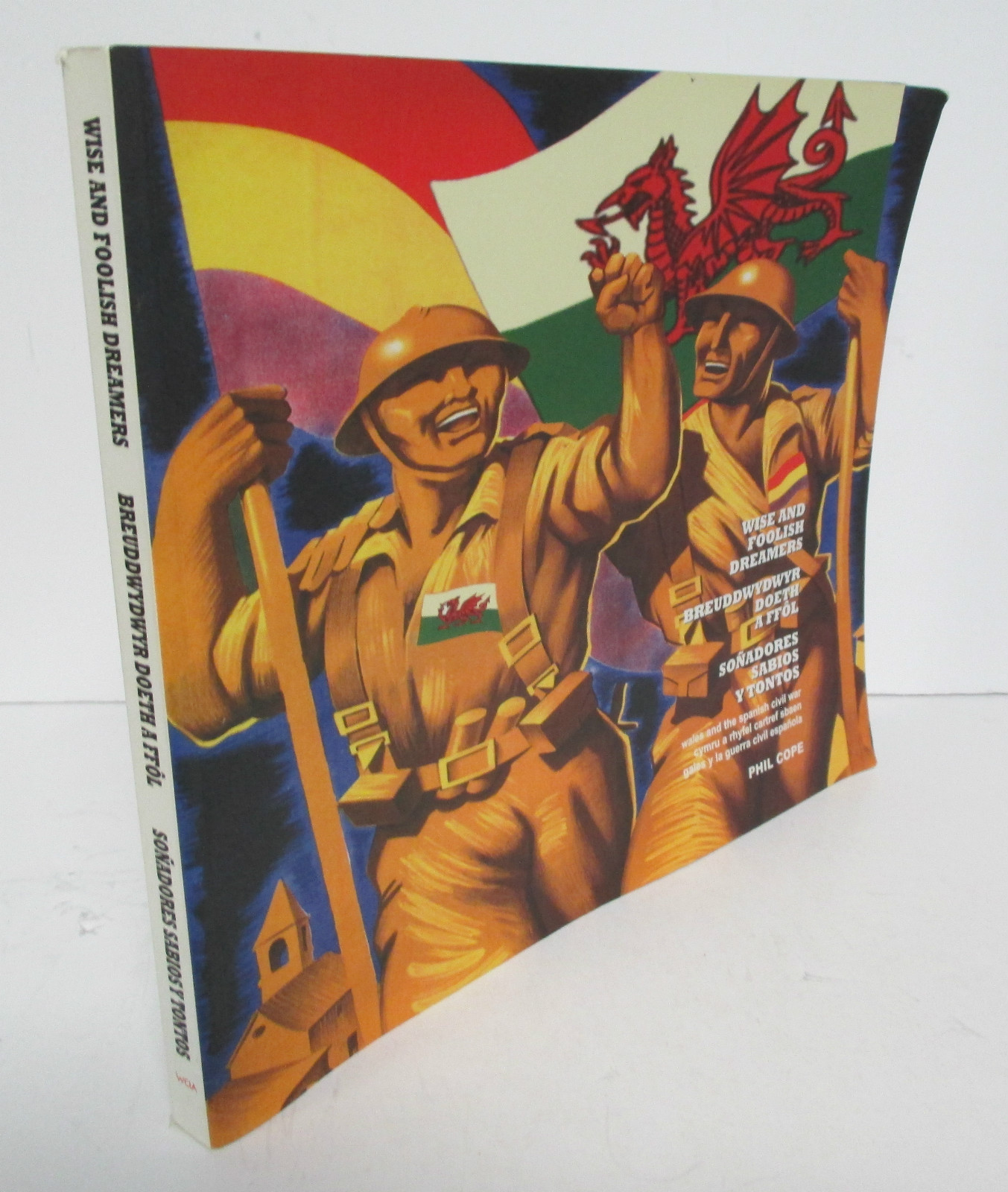
Over 2007-11 WCIA coordinated with IBMT Cymru the Heritage Lottery funded project ‘Wise and Foolish Dreamers’, which highlighted and preserved the history of Welsh volunteers who fought in the International Brigades during the Spanish Civil War in the 1930s, and its impact on communities across the South Wales Valleys. The phrase comes from a famous quote by the Welsh political figure Aneurin Bevan, who famously referred to the volunteers as “the wise and foolish dreamers of reality.” A touring exhibition took the story to over 20 locations and 2,500 school pupils, with publications produced for schools and local groups.
The bilingual education pack and accompanying materials from “Wise and Foolish Dreamers” remain available for use as a tool for citizenship, solidarity and peace education (see below).
What can we take from the story today?
Welsh communities with almost nothing shared what they had with strangers fleeing war, and some gave their lives for people they’d never met. In a world of new conflicts and new refugees, Wales’ solidarity over the Spanish Civil War became not just a history, but an inheritance that has inspired generations – and continues to do so.
Marking the 90th Anniversary
- International Brigades Cymru organised a national commemoration held 28 June 2026 at the Welsh International Brigadiers’ Memorial, Alexandra Gardens, Cardiff, with banners honouring Dobson, Tom Jones and Silverthorne.
- Rhondda Cynon Taf–Spain heritage collaboration: RCT Council and Porta de la Historia are excavating Ebro battlefield sites, retracing Harry Dobson’s final steps; a digitised memorial at Rhondda Heritage Park names 31 Rhondda volunteers.
- UK-wide: IBMT lectures and events through 2026, included ‘The Spanish Civil War at 90‘ at the People’s History Museum, Manchester (11 July); new books include Chris Hall’s ‘The Passionate Cause‘ (2026).
- Explore digitised archives and items tagged ‘Spanish Civil War’ on People’s Collection Wales, and the wider Cymru Global PCW Archives
- WCIA’s bilingual education pack “Wise and Foolish Dreamers” and accompanying materials remain available for use as a tool for citizenship, solidarity and peace education today; copies can be picked up (for a small donation of your choice) from the ‘Honesty Bookshop’ in the Temple of Peace reception area. Copies can also be requested by post by emailing croeso@cymru.global.